Also known as Balotin Bergamot · Canton Lemon · Chine Lemon
Category: Fruit
Type: Tree
Sunlight: Full Sun
Water: Consistent Moisture
Temperature: Warm
Habitat: Outdoor
Lemon (Citrus × limon) is a fragrant citrus fruit known for its tart juice and aromatic zest, widely used in culinary and household applications.
Citrus × limon, commonly known as the lemon, is a small evergreen tree or shrub belonging to the family Rutaceae. It is a hybrid of ancient origin, widely cultivated for its distinctive fruit. The lemon is a cornerstone of global agriculture and cuisine, prized for its tart flavor and aromatic qualities.
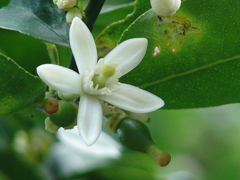
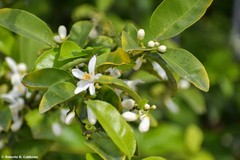
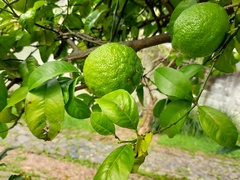
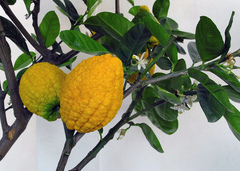
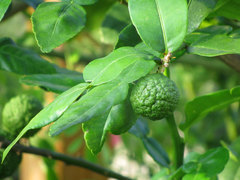
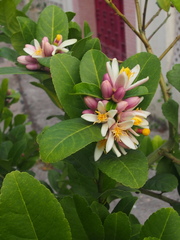
Physically, Citrus × limon typically grows to a height of 3 to 6 meters, though it can reach up to 10 meters in ideal conditions. Its growth habit is often bushy and somewhat spreading, with thorny branches. The leaves are ovate to elliptical, glossy green, and possess a characteristic crenulate margin. They are arranged alternately on the stem and are aromatic when crushed. The flowers are solitary or borne in small clusters, typically appearing in the leaf axils. They are fragrant, white on the outside and purplish tinged on the exterior of the petals, with numerous stamens. The fruit, the lemon, is an oval-shaped berry, technically a hesperidium, with a leathery rind that is typically yellow when ripe. The rind contains oil glands that contribute to its strong fragrance. The interior is divided into segments filled with pulp vesicles containing acidic juice. Seeds, when present, are typically ovoid and pointed at one end. The bark is generally smooth and grayish-brown.
The precise native distribution of Citrus × limon is not definitively known due to its long history of cultivation and hybridization. It is believed to have originated in Southeast Asia, likely a hybrid involving Citrus medica (citron) and Citrus micrantha. Today, it is cultivated extensively in subtropical and tropical regions worldwide. It thrives in well-drained soils and prefers a climate with ample sunlight and protection from frost. Optimal growth occurs in temperatures ranging from 15 to 25 degrees Celsius. While it is a cultivated species, its natural habitat would have been areas with consistent moisture and warmth.
The economic and culinary importance of Citrus × limon is immense. Its juice is a vital ingredient in countless dishes, beverages, and desserts, valued for its acidity and refreshing taste. The zest of the fruit is also used for flavoring. Beyond culinary applications, lemons have a long history of use in traditional medicine, though scientific validation for many of these uses is ongoing. The essential oils extracted from the rind are used in perfumery and aromatherapy. Commercially, lemons are a significant agricultural commodity, with major production centers in countries like India, Mexico, China, Argentina, and Spain.
An interesting characteristic of Citrus × limon is its ability to flower and fruit throughout the year in suitable climates, often bearing flowers and ripe fruit simultaneously. This continuous fruiting cycle is a desirable trait for cultivation. The acidity of the fruit is primarily due to citric acid, which plays a role in its preservation properties and its ability to tenderize meats. The plant's thorny nature is thought to be a defense mechanism against herbivores.
At-a-glance light, water, soil, and growing conditions from plant data
Light
Full Sun
100% intensity
Requires at least 6-8 hours of direct sunlight daily.
Watering
Consistent Moisture
75% intensity
Allow topsoil to dry slightly between waterings; avoid waterlogging.
Soil
Well-drained, slightly acidic loam
50% intensity
Temperature
Warm
75% intensity
Thrives in temperatures between 15-30°C; protect from frost.
Habitat
Outdoor
50% intensity
Fertilizer
Regular Feeding
75% intensity
Use a balanced citrus fertilizer during the growing season.
Lemon Toxicity
Safety information from plant toxicity data
Toxicity details for Lemon
Attribute
Value
Toxic for humans
No
0/5 intensity
Toxic for pets
No
0/5 intensity
Edible
Yes
None
Lemon Quick Facts
Key traits and growing stats from plant data
Plant Type
Tree
Plant Category
Fruit
Plant Place Type
Garden, Pot
Plant Environment
Outdoor
Lifespan
Perennial
Plant Height
3.0 - 6.0 m
Spread
2.0 - 4.0 m
Growth Rate
Moderate
Dormancy
None
Leaf Color
Green
Leaf Type
Evergreen
Flower Size
2.5 cm
Optimal Sunlight Lux
65000
Care guide for Lemon
Watering, pruning, propagation, and repotting details from plant data
Water
Water deeply when the top 2-5 cm of soil feels dry. Ensure good drainage to prevent waterlogging. Reduce watering frequency in winter, allowing the soil to dry out slightly more between waterings.
Consistent moisture is key for fruit development.
Pruning
Prune in late winter or early spring to remove dead, damaged, or crossing branches. Shape the tree for good air circulation and light penetration.
Thin out dense areas to encourage fruit production and maintain desired size. Remove suckers from the base promptly.
Propagation
Lemon trees are typically propagated by grafting onto rootstock for disease resistance and vigor. Seed propagation is possible but may result in fruit that differs from the parent tree and takes many years to mature.
Cuttings can also be used but are more challenging.
Repotting
Repot young lemon trees every 1-2 years, and mature trees every 3-4 years, when rootbound. Use a well-draining potting mix amended with organic matter.
Choose a pot that is only slightly larger than the current one to avoid overwatering issues.
Identify plants like this with ePlant
Snap a photo to get care tips and match similar species on the go.
What are the ideal growing conditions for a lemon tree?
Lemon trees thrive in full sun, well-draining soil, and protection from frost. They prefer temperatures between 21-29°C and require regular watering, especially during dry periods.
How often should I water my lemon tree?
Water deeply when the top 2-5 cm of soil feels dry. Overwatering can lead to root rot, so ensure good drainage. Reduce watering in cooler months.
When do lemon trees typically produce fruit?
Lemon trees can start producing fruit within 2-4 years, depending on the variety and growing conditions. Fruit typically ripens 6-9 months after flowering.
Can lemon trees be grown indoors?
Yes, dwarf varieties of Citrus × limon can be successfully grown indoors in pots, provided they receive adequate sunlight (preferably from a south-facing window or grow lights) and are protected from drafts.
How do I prune a lemon tree?
Pruning is best done in late winter or early spring. Remove any dead, damaged, or crossing branches. Aim to create an open canopy to allow for good air circulation and sunlight penetration.