
About the author
Maya Chen
Houseplant Care Editor
Maya has spent twelve years writing about indoor gardening and troubleshooting houseplants for beginners. She tests care routines on her own collection of pothos, ferns, and philodendrons before publishing guides.
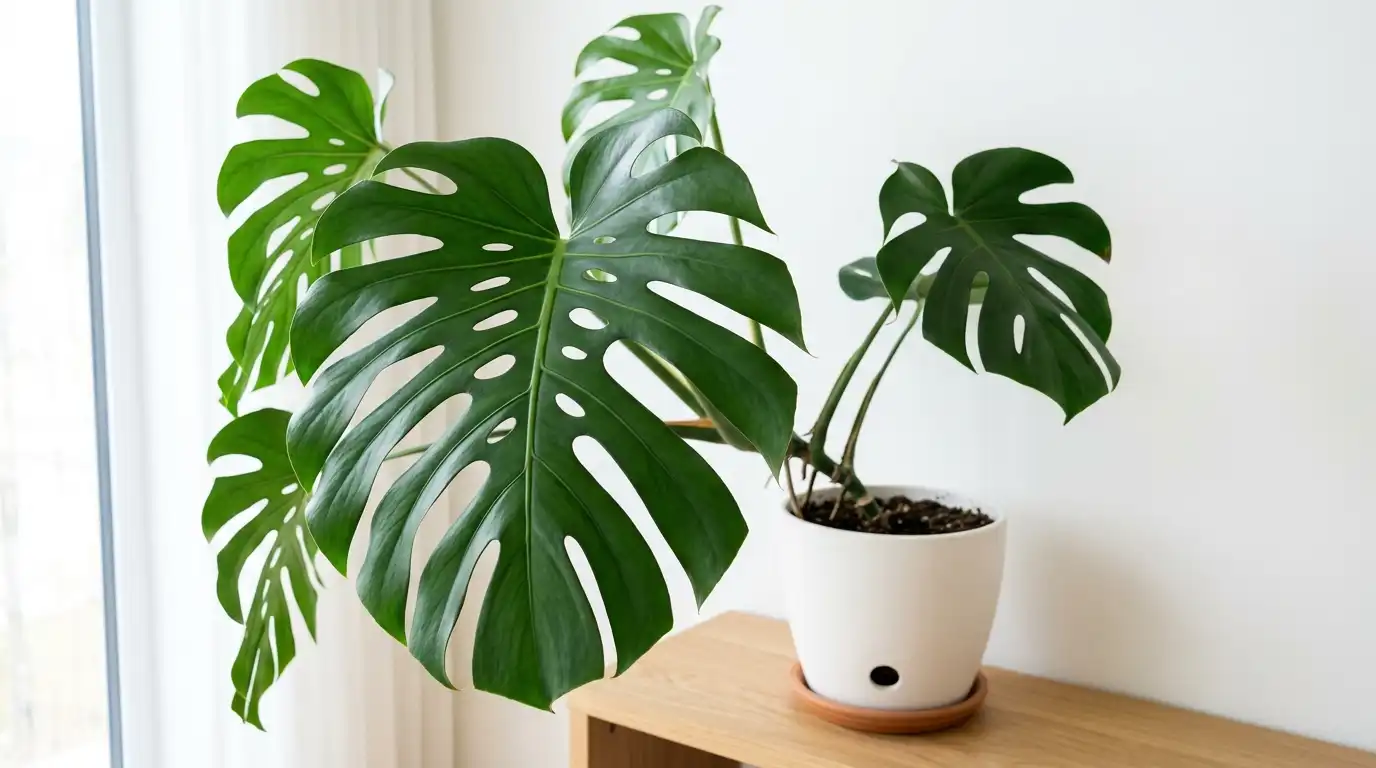
Monstera deliciosa is one of the most popular tropical houseplants-and one of the most misunderstood. It wants bright indirect light, consistent but not soggy moisture, and a moss pole once stems get long.
Confirm your plant with ePlant AI (Monstera adansonii and deliciosa look similar when young). Pet owners: monstera is toxic to cats and dogs-see our toxic houseplants guide.
Light and Placement
Place within a few feet of an east or west window, or pulled back from south. Direct midday sun burns leaves. Too little light produces small leaves without splits (fenestrations).
Watering and Feeding
Water when the top 2 inches of soil are dry. Reduce frequency in winter. Feed monthly spring through fall with a balanced liquid fertilizer diluted to half strength.
Yellow leaves with wet soil suggest overwatering; crispy brown edges often mean underwatering or low humidity.
Is Your Plant a Monstera?
Snap a photo for instant ID and tailored care reminders in the ePlant AI app.
Identify with ePlant AIFrequently Asked Questions
Why does my monstera not have holes?
Young plants and low light produce solid leaves. Give brighter indirect light and time-fenestrations appear on newer growth as the plant matures.
Do monsteras need a moss pole?
Not required, but aerial roots attach to moss or coir poles and support larger leaves. Tie stems loosely as they climb.
How big do monsteras get indoors?
With good care they can reach 6–8 feet tall and several feet wide. Prune long stems or train vertically to manage size.