
About the author
Maya Chen
Houseplant Care Editor
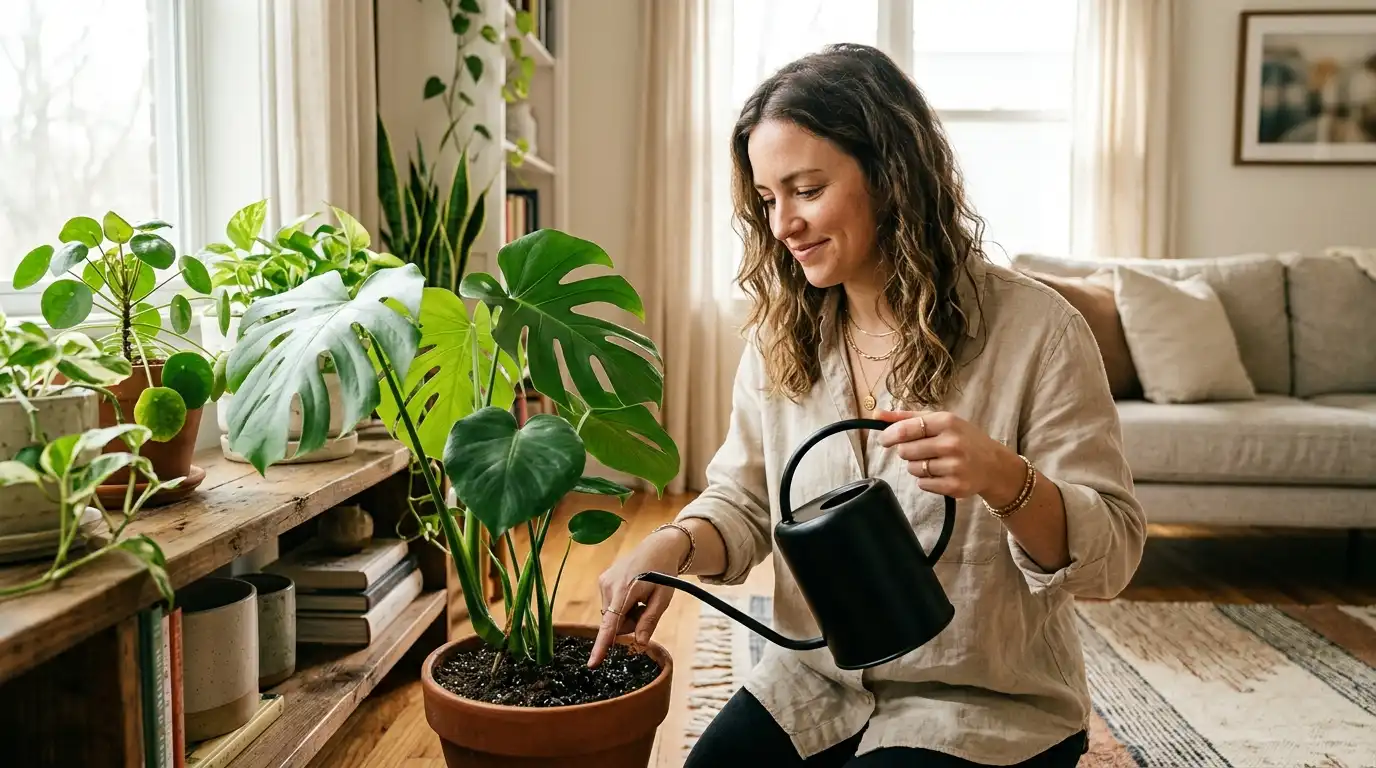
Maya has spent twelve years writing about indoor gardening and troubleshooting houseplants for beginners. She tests care routines on her own collection of pothos, ferns, and philodendrons before publishing guides.
"Watering is not a schedule on your calendar-it is a response to soil moisture, light, pot size, and season. Master the finger test and drainage, and most houseplants become far easier to keep alive.
This guide explains how to water houseplants correctly, with real examples for succulents vs. tropicals. Identify your plant with the ePlant AI identifier, then check species notes in our encyclopedia. For yellow leaves from too much water, see yellow leaves causes and fixes.
Extension guides from University of Maryland and the RHS align with the approach below.
The Finger Test (and When to Trust It)
Stick your finger 1–2 inches into the soil. If it feels dry, most tropical houseplants are ready to drink. If it is still cool and damp, wait. Succulents and cacti often need the soil dry much deeper-sometimes halfway down the pot.
Example: A pothos in a 6-inch pot near an east window might need water every 7–10 days in winter but every 5 days in summer. A snake plant in the same room might go three weeks between drinks year-round.
How to Water Step by Step
- Use room-temperature water when possible; cold water can shock roots.
- Water slowly until it exits the drainage hole-this fully wets the root ball.
- Discard excess from the saucer or decorative cache pot.
- Skip the next watering until the top layer dries per that plant’s needs.
Pro Tip
Lift the pot before and after watering. A light pot usually means dry soil; a heavy pot means wait. This skill beats any calendar reminder.
Frequently Asked Questions
Should I water on a schedule?
Use schedules only as reminders to check soil, not as automatic watering days. Light, humidity, and growth stage change how fast soil dries.
Is tap water OK for houseplants?
Usually yes. If leaves show tip burn on sensitive plants (some calatheas, dracaenas), try filtered water or let tap water sit overnight so chlorine dissipates.
What if soil is wet but the plant looks thirsty?
You may have root rot or compacted soil-roots cannot take up water. Stop watering, check roots, and repot into fresh mix if they are brown and mushy.