
About the author
Elena Vasquez
Indoor Gardening & Lifestyle Editor
Elena writes about apartment-friendly plants, design-forward houseplant trends, and creative projects like kokedama and terrariums. She balances aesthetics with realistic care advice for busy households.
"Dark and moody houseplants are trending in 2026. Think deep purple, burgundy, and near-black leaves that add drama without flowers. Here are 12 that are easy to find and care for.
Dark foliage stands out against light walls and pairs well with green. Most of these need bright indirect light to keep their color. Use ePlant AI to confirm any plant and get care in our encyclopedia. For more 2026 trends, see our plant trends post.
12 Dark Foliage Houseplants to Try
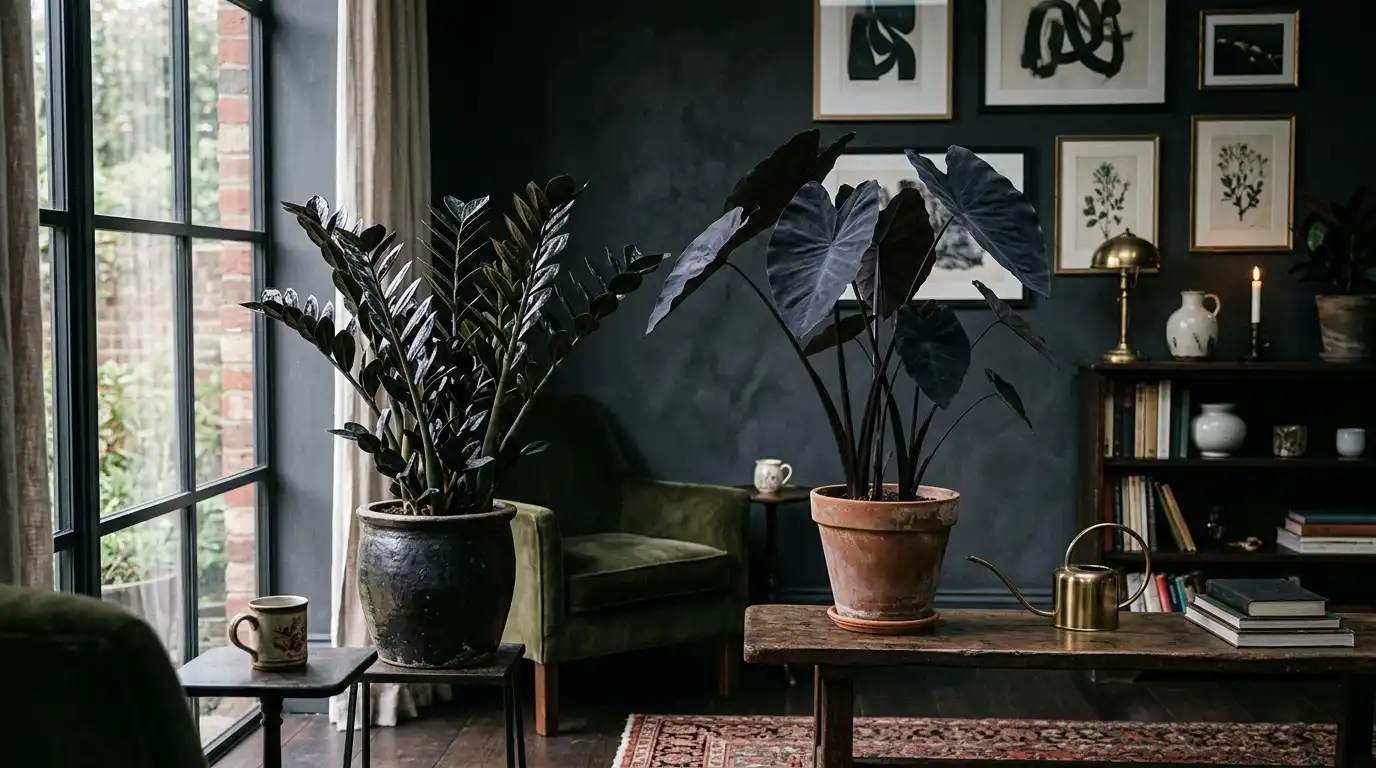
- Raven ZZ (Zamioculcas zamiifolia Raven) – Near-black new growth; low maintenance. Toxic to pets.
- Black coral colocasia (Colocasia) – Large dark leaves; humidity and bright indirect light.
- Black velvet alocasia (Alocasia reginula) – Small, velvety dark leaves; humidity lover.
- Black Prince echeveria – Succulent; rosettes turn dark in good light.
- Black mondo grass (Ophiopogon) – Grassy dark foliage; outdoor or cool indoor.
- Caladium (dark cultivars) – Arrow-shaped leaves; many dark varieties.
- Purple shamrock (Oxalis triangularis) – Deep purple leaves; folds at night.
- Coleus (dark varieties) – Easy; many near-black or burgundy cultivars.
- Ti plant (Cordyline) – Strappy leaves; dark red to purple forms.
- Rex begonia (dark types) – Patterned leaves; many dark and metallic varieties.
- Peperomia (dark cultivars) – Compact; some have very dark foliage.
- Blackie sweet potato vine (Ipomoea) – Trailing; deep purple-black leaves; often seasonal.
Check toxicity before buying if you have pets. See our toxic houseplants guide and pet-safe alternatives.
Identify Dark Foliage Plants
Snap a photo with ePlant AI to name the plant and get care tips.
Identify with ePlant AIFrequently Asked Questions
Why is my Raven ZZ not turning black?
New growth emerges green and darkens with age and with enough light. Give it bright indirect light so the leaves develop the dark color. Very low light can leave it more green.