
About the author
Maya Chen
Houseplant Care Editor
Maya has spent twelve years writing about indoor gardening and troubleshooting houseplants for beginners. She tests care routines on her own collection of pothos, ferns, and philodendrons before publishing guides.
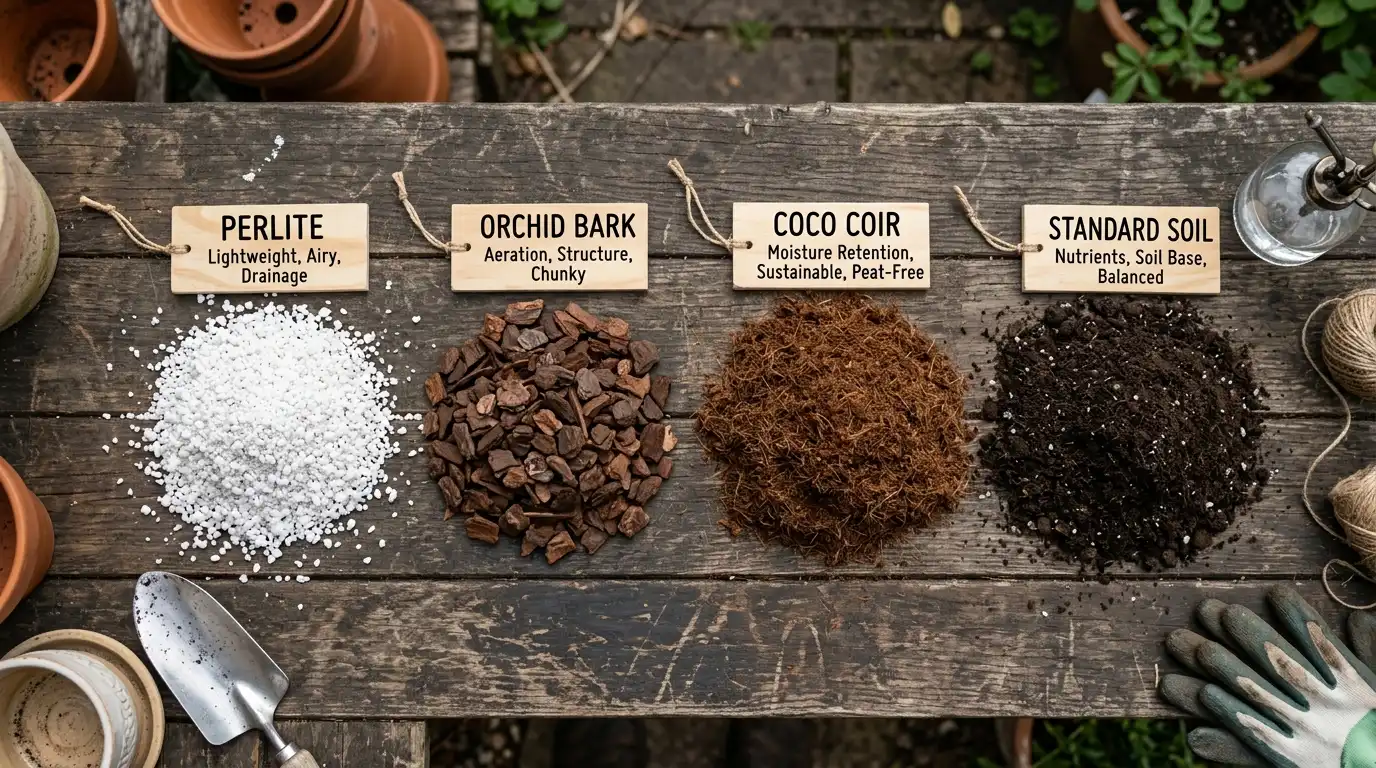
Potting mix affects watering frequency, root health, and how often you repot. This guide compares mixes for succulents, tropical foliage, orchids, and African violets-with examples you can find at any garden center.
When you repot, follow our repotting guide. Confirm plant ID with ePlant AI.
Mix Types at a Glance
- All-purpose peat/coir mix: Pothos, philodendron, many ficus-balanced drainage and retention.
- Cactus/succulent mix: Extra perlite or grit; faster drainage for sansevieria, echeveria, haworthia.
- Orchid bark mix: Chunky bark for epiphytic roots; phalaenopsis and oncidium.
- African violet mix: Lighter, more porous; also suits streptocarpus and some peperomias.
Frequently Asked Questions
Can I make my own houseplant mix?
Yes. A common base is 2 parts peat or coco coir, 1 part perlite, and optional bark for aroids. Adjust perlite up for succulents, down for ferns that like steady moisture.
When should I refresh soil without upsizing the pot?
Every 1–2 years for fast growers, or when water runs straight through and salts crust the surface. Tease old soil from roots and repot into the same size with fresh mix.